Antibiotic resistance is a growing problem worldwide. Antibiotics save lives, but incorrect and excessive use allows bacteria to adapt, so that medicines work less well or even not at all. In many communities there is still little knowledge about the difference between bacterial and viral infections. As a result, antibiotics are sometimes used for complaints such as colds or flu, or a course is not completed. This increases the risk of resistance and makes future infections harder to treat.
The project at Highridge School in Arusha arose from this urgency. The initiative brings together knowledge, practice and community to make antibiotic resistance understandable and open to discussion. We started with extensive literature research and then went into the community. We spoke with pupils and teachers of Highridge Primary School, local pharmacists and healthcare professionals, visited Mount Meru Hospital and talked with members of the local church to gain a good understanding of the social and cultural context.
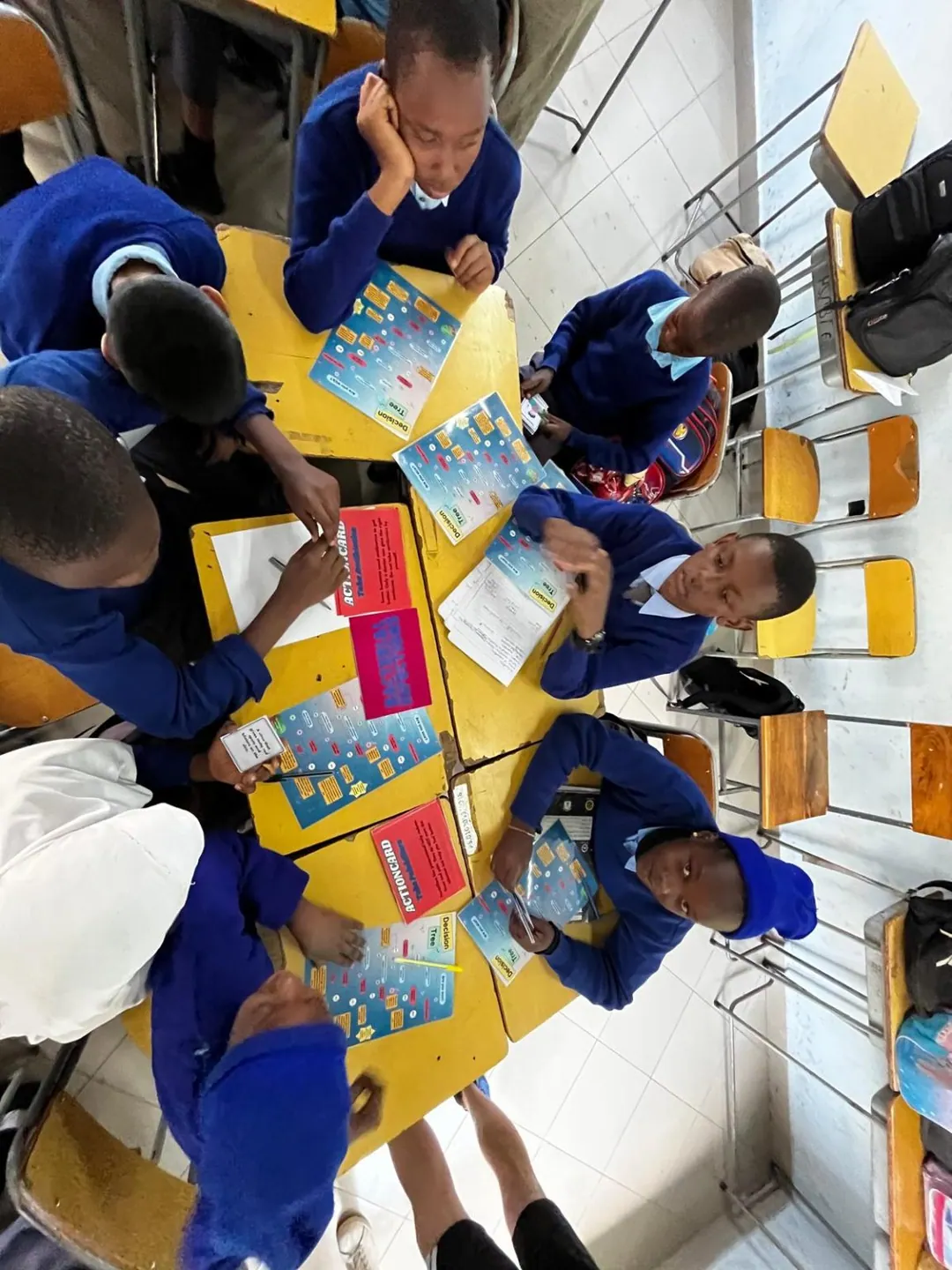
Based on these insights, we developed a practical and interactive teaching programme that connects with children’s everyday world. Together with the school, we gave lessons, shared the materials and talked about responsible use of medicines. The project goes beyond passing on knowledge. Working with local partners has produced a sustainable, transferable approach that can also be used at other schools and in other educational settings.
Educational products
To support the lessons, we developed a complete toolkit with a knowledge test, a short educational video, a poster about the difference between bacteria and viruses and a decision flowchart that helps you work out what to do when you are ill.
We also made the game “Chill or Pill”, in which pupils practise making choices in groups: rest and simple care, or antibiotics through a healthcare provider. All materials are supported by a teachers’ manual with clear steps for a lesson of 60 to 65 minutes.
Download the teaching materials below:
Video