The board will discuss the following projects and choose which ones qualify for fundraising, or in what order they will be taken up. It may also decide to recruit donors per project (donors can indicate which project they want their funds to go to). In any case, the board must give its approval to each project. Outline budgets still have to be written for each project.
Palliative Care Mount Meru Regional Referral Hospital
Research at this hospital shows that education in palliative care is urgently needed. Every year about 1,500 people die in this hospital, of whom perhaps as many as 1,000 need palliative care. Dying in the hospital is terrible because pain is not under control and all kinds of action are still taken to save people (for example giving blood and drips, antibiotics and so on). As a result, the bill for the family keeps rising (people are usually uninsured) and this does not help the patient.
There is a palliative team, which Ellen will join in a supporting role. It is essential, however, that as many staff members as possible have basic knowledge, so that policy can be understood and carried out well.
Palliative care does not have to be expensive and can probably even reduce costs for the hospital and the patient’s family. This keeps resources available for people who can make better use of them. Savings can be made by leaving out unnecessary things. When patients are transferred to palliative care teams, there are fewer dying people in the hospital. The overall health of the hospital improves for people who can still recover.
In 2020 the palliative team wrote a plan describing its goals for improving this care at Mount Meru RR Hospital. The hospital secretary will draw up budgets based on this plan. The board of Lighthouse Support will consider the team’s request for help to decide whether and how palliative care can be moved forward.
Chimneys for Maasai huts
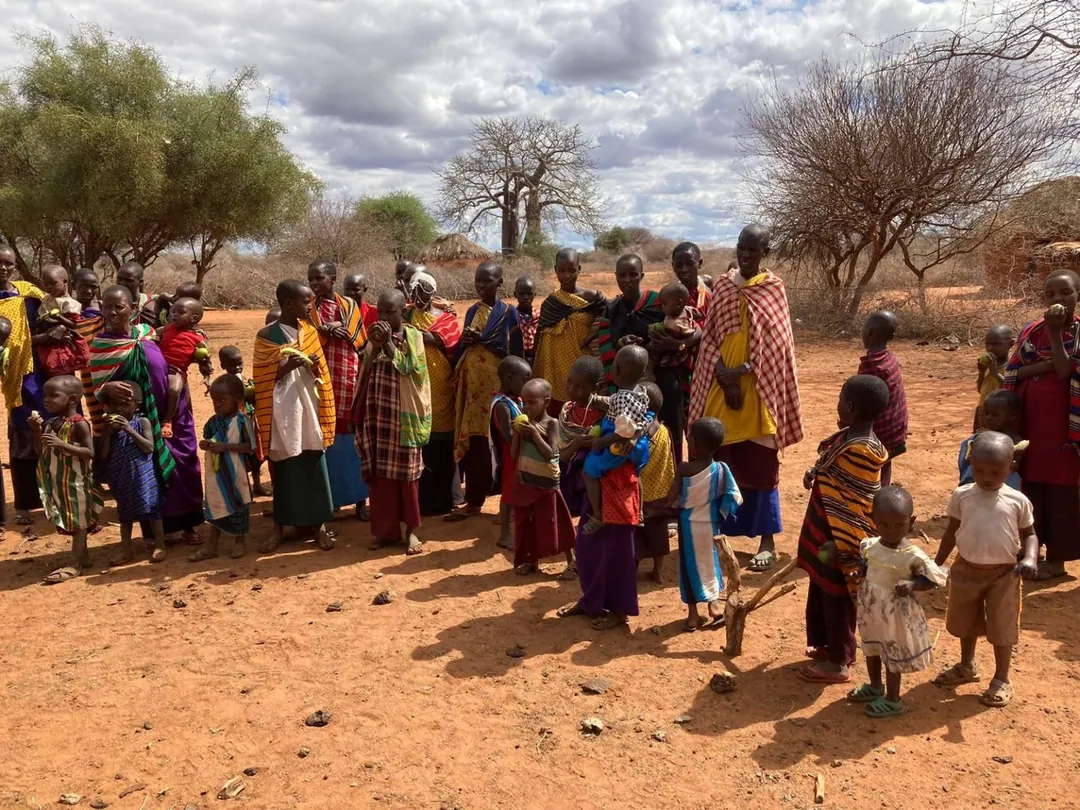
Maasai huts are built without a chimney, yet cooking is done indoors over an open fire. You can imagine how thick with smoke it gets. This is bad for people’s lungs. A simple chimney could already solve much of the problem. It does not cost much money, but the idea is unknown. By fitting a number of huts with a chimney, the aim is that more people will start doing this. The idea is that fewer people will suffer from the smoke; small children in particular have lung problems caused by dust and smoke.
No attention was given to this in 2020. It can still be taken up in 2021.
Wedding dresses for Nkoaranga
Recently, Ellen and her students managed to get a number of wedding dresses to Tanzania, in addition to the team’s existing collection. The idea is that the wedding dresses will be rented out or sold. The money raised this way can be used by the Nkoaranga palliative team. They provide home care for palliative patients. The team provides holistic care, which means that it looks not only at the sick person but also at the family. Alternative sources of income are sought if the sick person turns out to be the breadwinner, and attention is also given to other social problems (such as the stigma around HIV/Aids). Psychological problems are looked at too, and so on.
Following the 2020 evaluation, the palliative team is exploring whether it is possible to open a shop in Tengeru. Many people gather here on the fortnightly market days and could see the dresses. Once the team has made a budget and written a request for help, the board will make a decision.
Exchange with Tanzania Support
Contacts have been made with the Tanzania Support foundation that allow knowledge and experience to be exchanged. When Ellen is in Tanzania, she is available to assist this foundation if wanted. It is active in the area of Selela and Mbaash (via Mto wa Mbu), a few hours from Arusha, in the Maasai community. Successful Tanzania Support projects could perhaps later be copied to the Mshie area near Mererani.
In 2020 Ellen visited the project in Mbaash. Tanzania Support remains interested in working together.
Maasai children get a chance at a good education
Many government schools provide poor education. As a result, children who depend on them have poor prospects for the future. Their parents cannot afford better education. A sponsor has been found who will pay the school fees of two Maasai children for 5 years. This year the children are going to Dinka School, just outside Arusha, for the first time with this sponsorship. They board at the school, because every school offering good education is far from where they live.
In 2021 the foundation’s board wants to monitor how the children are doing and keep an eye on their home situation, from which they could become estranged because the difference between boarding school and home is considerable.