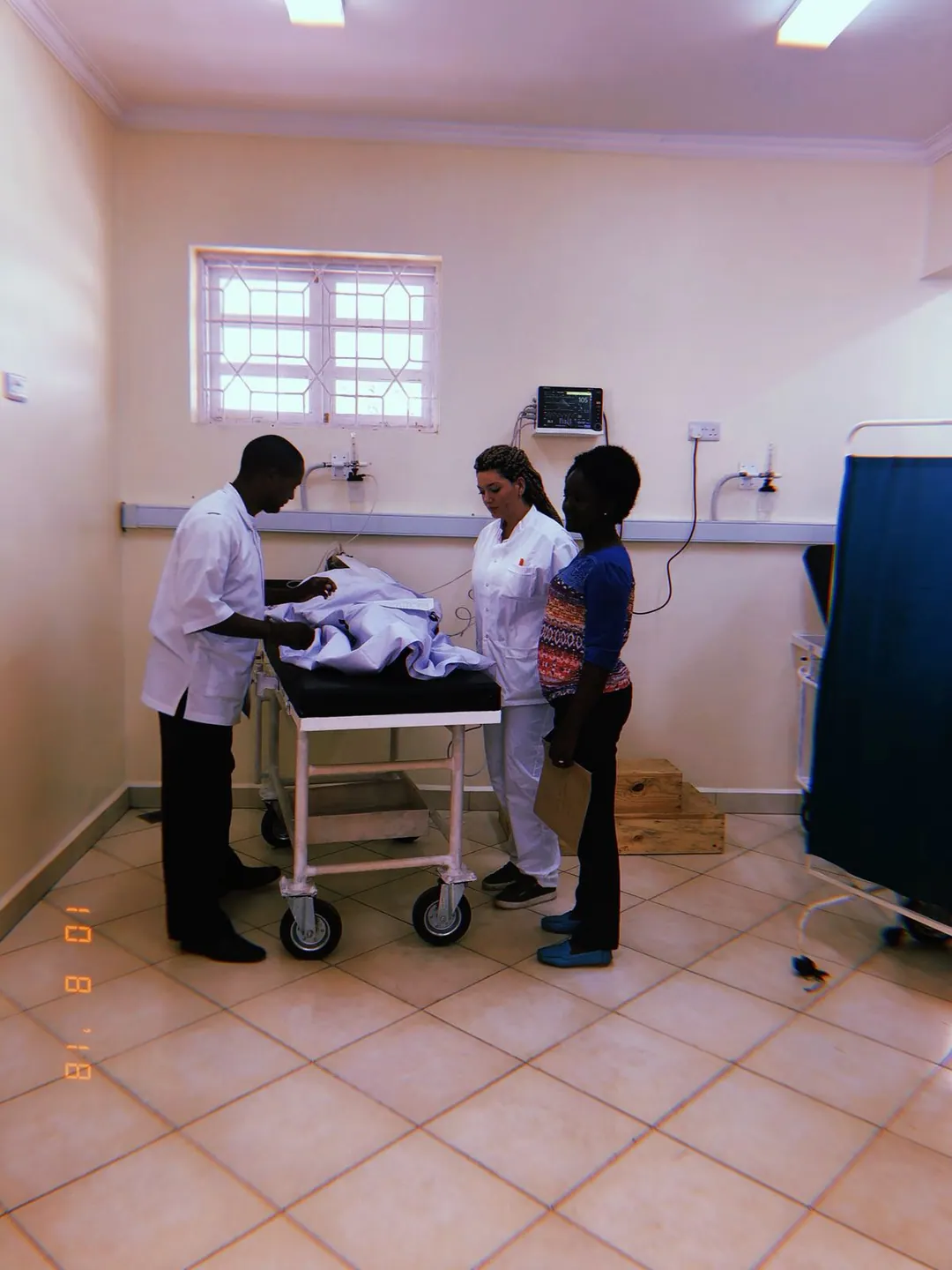
A nursing placement in Tanzania? That is an unforgettable experience!
It is all about exchanging knowledge. You learn from local care professionals, and they learn from you how things are done in the Netherlands. It also gives you a fantastic experience abroad. It is wonderful to experience a different view of care. I am sure you will be a different person and a better nurse after doing a placement in Tanzania.
Your placement is at a state hospital in Arusha. Many things are in short supply and not all treatments are possible due to a lack of equipment or medication. Even so, there is a lot for nursing students to learn. To name just a few examples:
How do you handle care when there really is no money? What is possible, and how creative do you have to be? Which conditions are common and why? How is prevention organised? What is better in Tanzania than in the Netherlands?
Small clinics refer difficult cases to the large hospital in the city, where you can do your placement. You can choose which department interests you. This is of course in consultation with the hospital and depends on the number of students on placement in each department.
This means that not everything is in stock, the lights sometimes go out or there is no water. That is exactly how you can experience what it means when there really is no money for healthcare. It is generally poor people who come to this hospital, which provides medical care to a large area. Many people are uninsured, and that can also lead to remarkable situations. Sometimes care cannot be given, sometimes medicines cannot be bought, and so on.
The conditions you see differ from those in the Netherlands. Burns are relatively common (from cooking over open fires, including many small children), there are many brain injuries from road accidents, mainly involving motorbikes (no helmet), there are extreme cases of diabetes and high blood pressure, complications during births (there are many births, so you also see more complicated cases) and in newborns, and there is also a larger number of patients with HIV/Aids and related infectious diseases. Malaria also occurs in people from outlying areas.
You stay in The House. It was set up for exactly that purpose. Different houses are used depending on the number of students coming in a given period. You can be at the hospital within 45 minutes. The university of applied sciences has experience with the hospital through me. The hospital is used to students and has plenty of experience with students from abroad. Your contract is signed with the hospital.
You can have a very educational and special time. There is also plenty of opportunity to exchange knowledge with the staff. By the time you want to come, a number of students will already have gone before you.
It is best to discuss exactly how this works with the internationalisation lecturers. They also hold a consultation hour where you can bring all your questions about the university and your placement here. This now often takes place via Teams. Students from other colleges or universities of applied sciences are of course very welcome too. Both vocational (MBO) and higher professional (HBO) students can come.
Ellen is also in Tanzania most of the time. She lives in Arusha too. She is of course available for questions or to help you find your way around the country. Tanzania is a stable and safe country.
People there speak Swahili, but the staff usually speak English. Some colleagues speak very good English, and you can always turn to them. Patients generally do not speak English, though some know a few words. That does make you pay attention to non-verbal communication. With a few words and some hand gestures you will soon get a long way.
Do you have any questions? Contact Ellen by email or WhatsApp.